








Scope the use case
Discovery
We agree what the feature should do, what good looks like and which data it may use.
AI-powered features and data foundations, from LLM-based search and assistants to recommendations, analytics and workflow automation, built on top of PostgreSQL, Redis and Elasticsearch.
The AI and data work we actually ship, grounded in your own data instead of a generic model.
Retrieval over your own data
RAG search and assistants grounded in your documents, with answers that cite the source they came from.
Structured outputs and tool-use
The model fills forms, calls your APIs and returns typed data, instead of free text someone has to parse.
Recommendations and automation
Personalisation, ranking and in-product assistants that take repetitive work off your team.
Data foundations underneath
Pipelines, indexing and audit trails on PostgreSQL, Redis and Elasticsearch, so the AI has something good to retrieve.
AI features are easy to demo and hard to ship. Here is where we put the effort, and what we refuse to do.
Most useful AI is grounded in your own data, retrieved at query time and cited. We reach for retrieval before anyone mentions fine-tuning.
A probabilistic feature needs a way to measure answer quality and catch failure modes. We do not ship an LLM feature we cannot test.
Pseudonymisation, no production secrets in tools, per-client carve-outs. Where a model should not see something, it does not.
The tools we reach for in this pillar. Honest, not exhaustive.
The AI, data and automation services we build features on.
Third-party services we wire in, picked per project. Our core stack is the section above.
Three common ways to add intelligence to a product. We default to retrieval and add the others only when the problem calls for them.
A starting point, not a rule. We pick per use case in discovery.
Retrieval over your own sources with citations, so answers are traceable instead of confidently wrong.
Evals on real cases with acceptance thresholds, so we know quality before launch and catch regressions after.
Input and output checks and a path back to a person when the model is unsure.
Vetted enterprise tools that contractually don't train on your data, no production secrets in prompts, pseudonymised test data and an audit trail, all written down in our AI Use Policy.
A small, testable first slice, not a six-month research project.
Discovery
We agree what the feature should do, what good looks like and which data it may use.
Build
Retrieval over your sources, structured outputs and the data foundations to support them.
Release
We measure answer quality, add guardrails and release behind a flag with a human-owned fallback.
Products where AI features shipped past the demo: grounded in real data, evaluated before launch and running in front of users.
Field notes and how-tos from the team, close to this stack.

Almost every company we speak to wants to do something with AI. Fewer can describe the process behind the problem. Why we map how the work happens today before choosing between AI, an integration, plain automation or changing the process itself.
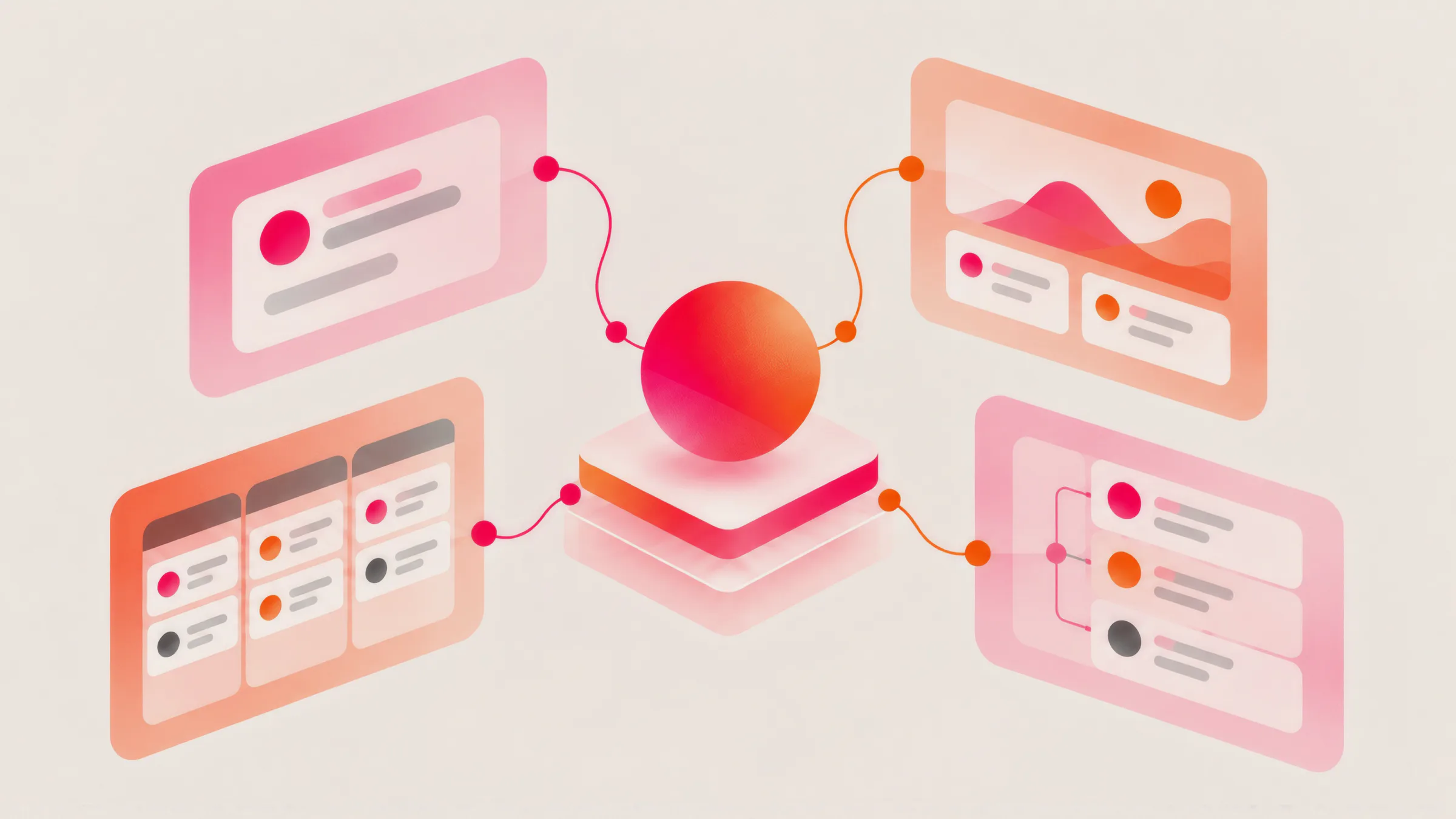
How Codepixel runs projects and operations in ClickUp, and why clear processes came before adding AI agents to the workflow.

Every agency you're evaluating claims AI augmentation, so the adjective tells you nothing. The specific version: where AI sits in our delivery, where it doesn't and where a senior engineer signs their name regardless.
Almost every company we speak to wants to do something with AI. Fewer can describe the process behind the problem. Why we map how the work happens today before choosing between AI, an integration, plain automation or changing the process itself.
How Codepixel runs projects and operations in ClickUp, and why clear processes came before adding AI agents to the workflow.
Every agency you're evaluating claims AI augmentation, so the adjective tells you nothing. The specific version: where AI sits in our delivery, where it doesn't and where a senior engineer signs their name regardless.
We default to retrieval over your own data, so answers are grounded in your sources and cite where they came from instead of being generated from the model's memory. Before launch we build evals on real cases with acceptance thresholds, so we measure answer quality rather than hoping it's good, and we add input and output guardrails plus a human-owned fallback for when the model is unsure. Where we can't reach a quality bar we can stand behind, we'll tell you the feature isn't ready rather than ship a confident guess.
No lock-in by design. We treat the model as a swappable component behind your own retrieval layer and structured-output contracts, and we work across providers like OpenAI, Anthropic, Google Gemini, Azure OpenAI and AWS Bedrock so you can move if pricing, latency or policy changes. You own the same things you own everywhere else with us: the code, the prompts, the eval suite and the retrieval index over your data, handed over with documentation, so the feature isn't dependent on us or on a single vendor to keep running.
By default, no. We pseudonymise or abstract where needed and follow per-client rules about what may or may not leave your environment. For clients with stricter requirements, we can use self-hosted or tenant-isolated AI options, defined together during onboarding.
We use AI to accelerate research, UX exploration, coding, testing and documentation, under clear human-owned standards. Seniors still make the calls on architecture, security, trade-offs and what actually ships; AI reduces busywork and iteration time instead of replacing judgment.
Tell us about your product and constraints, and we'll help you choose the right stack and a sensible first step.
Our playbook for integrating AI into product design and development workflows.
Download the playbook