Custom Software Development, Other app platformMontenegro
They've maintained a collaborative approach.
5.0
A web-based information system for voluntary and confidential counselling and testing at the Institut za javno zdravlje Crne Gore: anonymous client records, the full DPST testing workflow and national reporting across nine counselling centres, replacing spreadsheets and paper files.
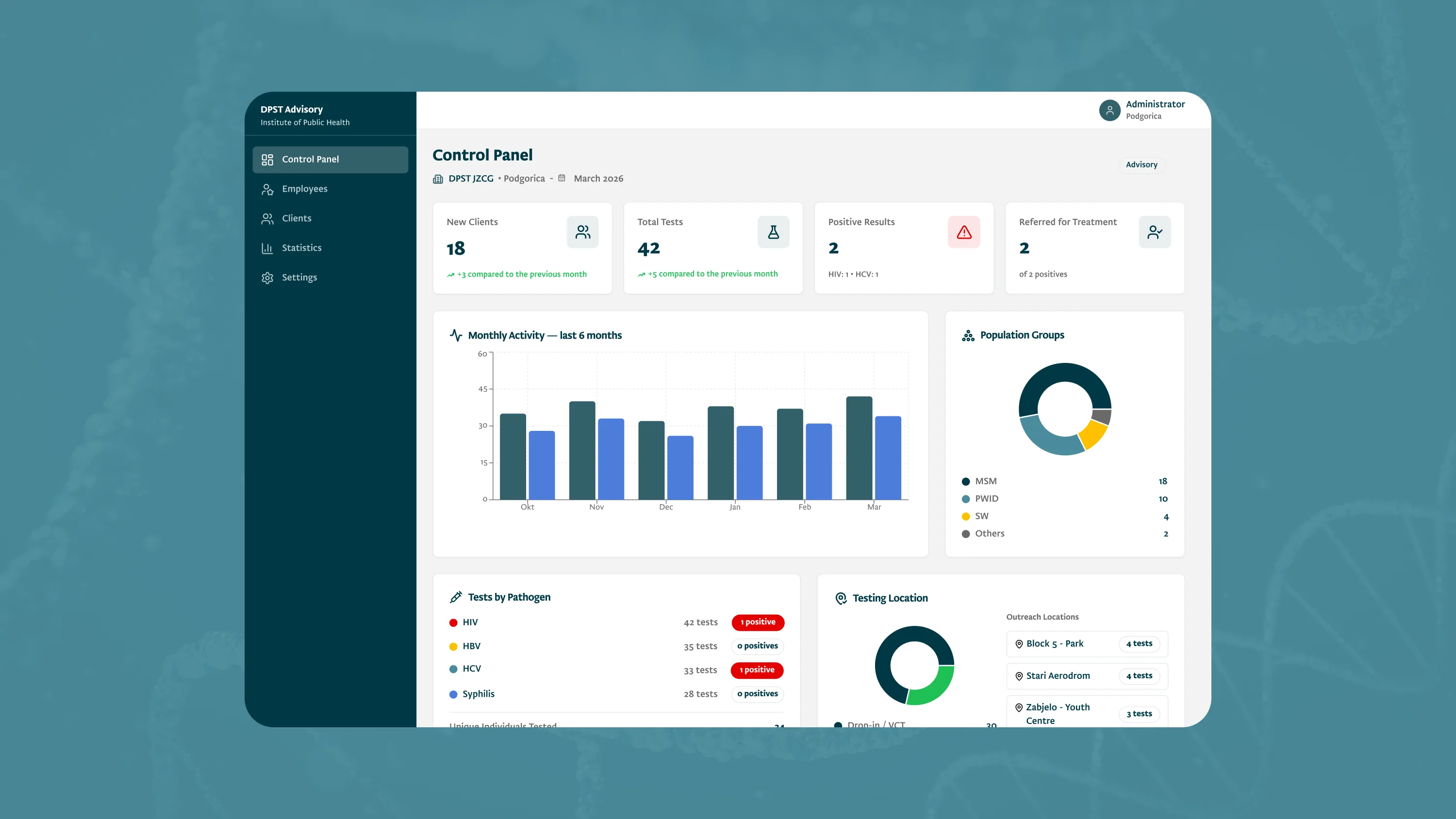
The Institut za javno zdravlje Crne Gore runs Montenegro's voluntary and confidential counselling and testing services for HIV, hepatitis B, hepatitis C and syphilis. The service operates through nine counselling centres across the country, with the main centre in Podgorica, and works under a strict confidentiality protocol: clients are counselled and tested without their names ever being collected.
We were selected through a public tender to design, build and deploy the information system that runs this service. The engagement covers business analysis, UX/UI design, software development, database implementation, testing and the transition to production infrastructure.
Counselling and testing records lived on paper forms and in spreadsheets, kept separately at each of the nine centres. There was no shared client record, no way to see activity across the network and no way to produce a national report without collecting and merging files by hand.
The data is among the most sensitive a public institution handles, so any system replacing the paper had to preserve the protocol's core guarantee: full case records with no personal identifiers, and access limited to exactly the people who need it.
| Counselling centre | HIV | HBV | HCV | Syphilis |
|---|---|---|---|---|
| Podgorica | 153 | 120 | 108 | 100 |
| Nikšić | 104 | 115 | 80 | 107 |
| Kotor | 59 | 81 | 92 | 54 |
| Budva | 47 | 65 | 55 | 42 |
| Berane | 38 | 37 | 41 | 45 |
| Bijelo Polje | 18 | 25 | 21 | 16 |
Nine cities which see their own set of data.
Counsellors work with clients at their own centre. National coordinators see data across all nine centres, read-only. Administrators manage users, roles and configuration. Every login requires two-factor authentication. Sensitive public health data is visible to exactly the people the protocol allows, and no one else.
A full case history. No name attached.
Every client is registered under a code built from fragments of their name, birth date and gender, following the DPST protocol. No names or personal identifiers enter the system. Behind each code sits the complete case file: every counselling session, test, result and referral in one timeline. Counsellors open one record instead of searching through paper files, and the client stays anonymous end to end.
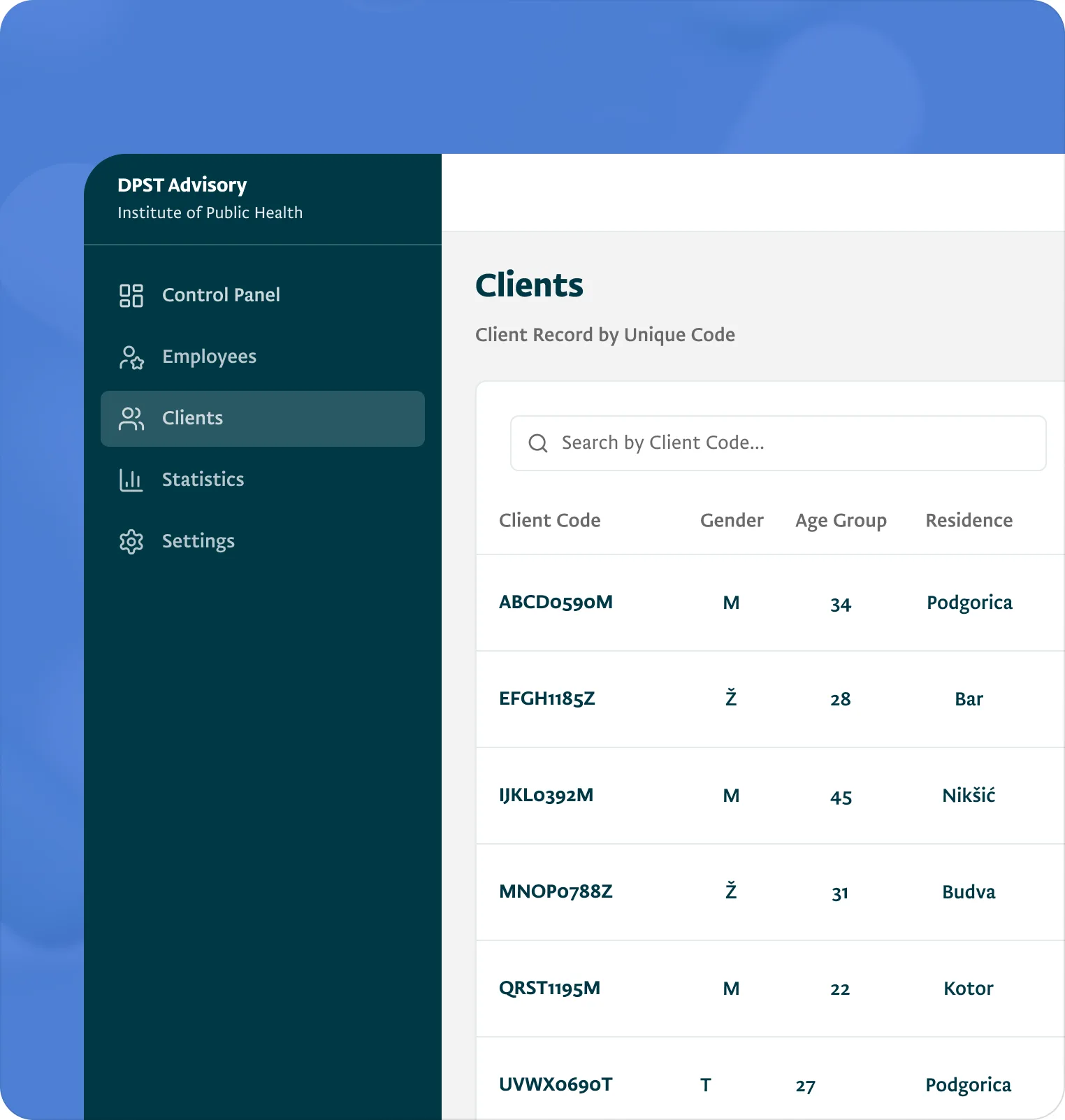
Nine filing cabinets became one record nobody has to chase.
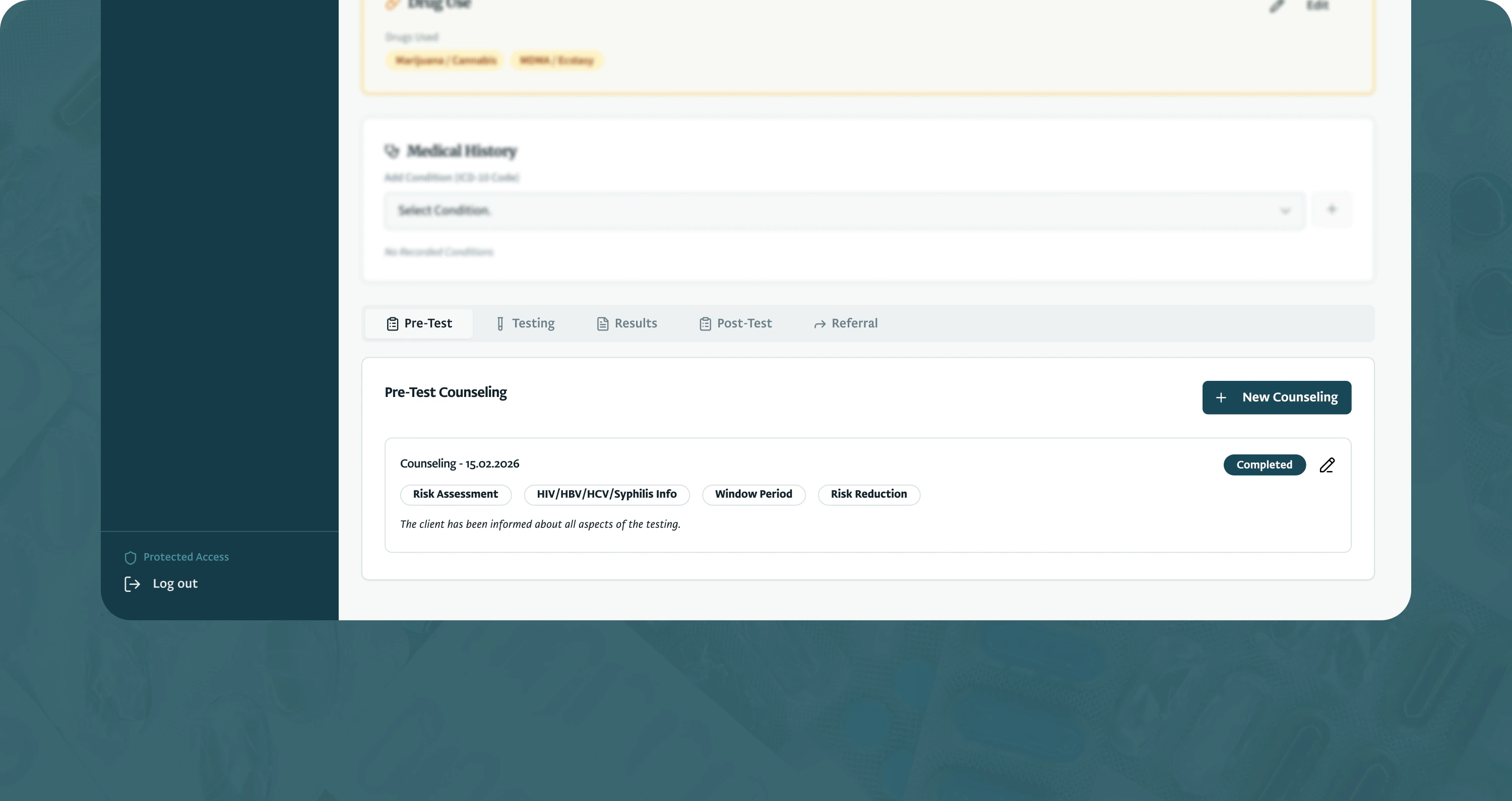
1 / 10Pre-test counselling
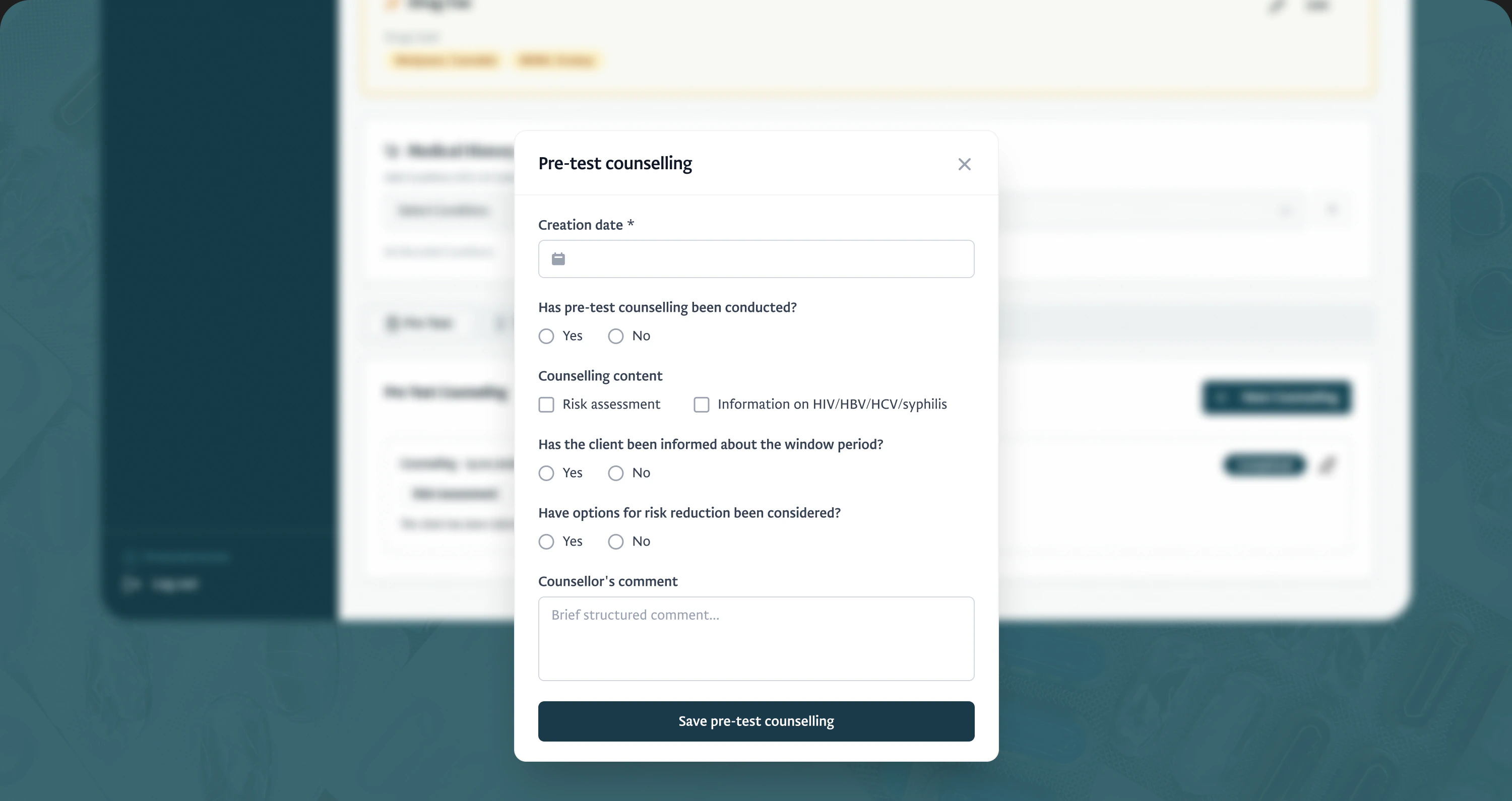
2 / 10Pre-test counselling form
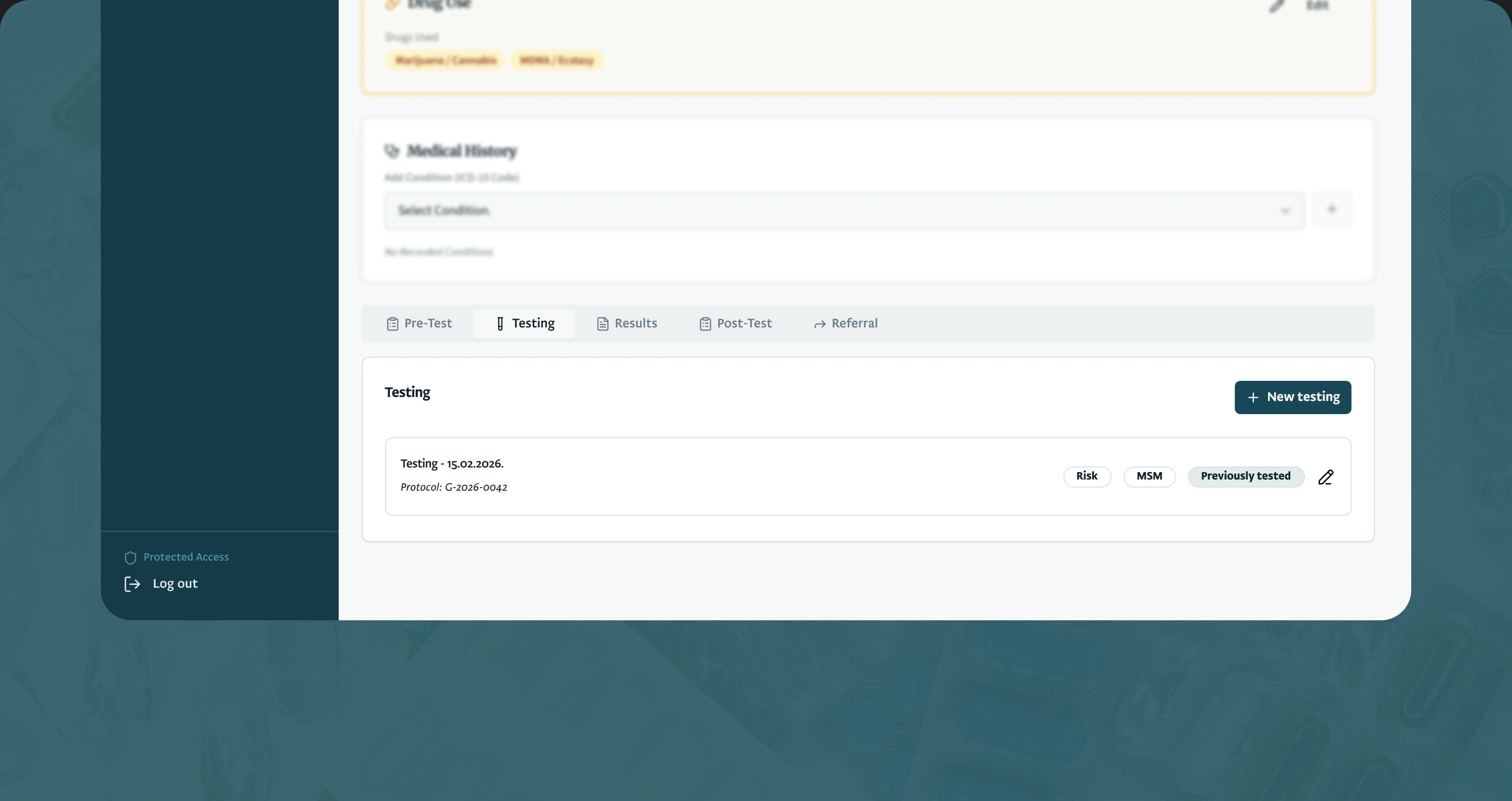
3 / 10Testing
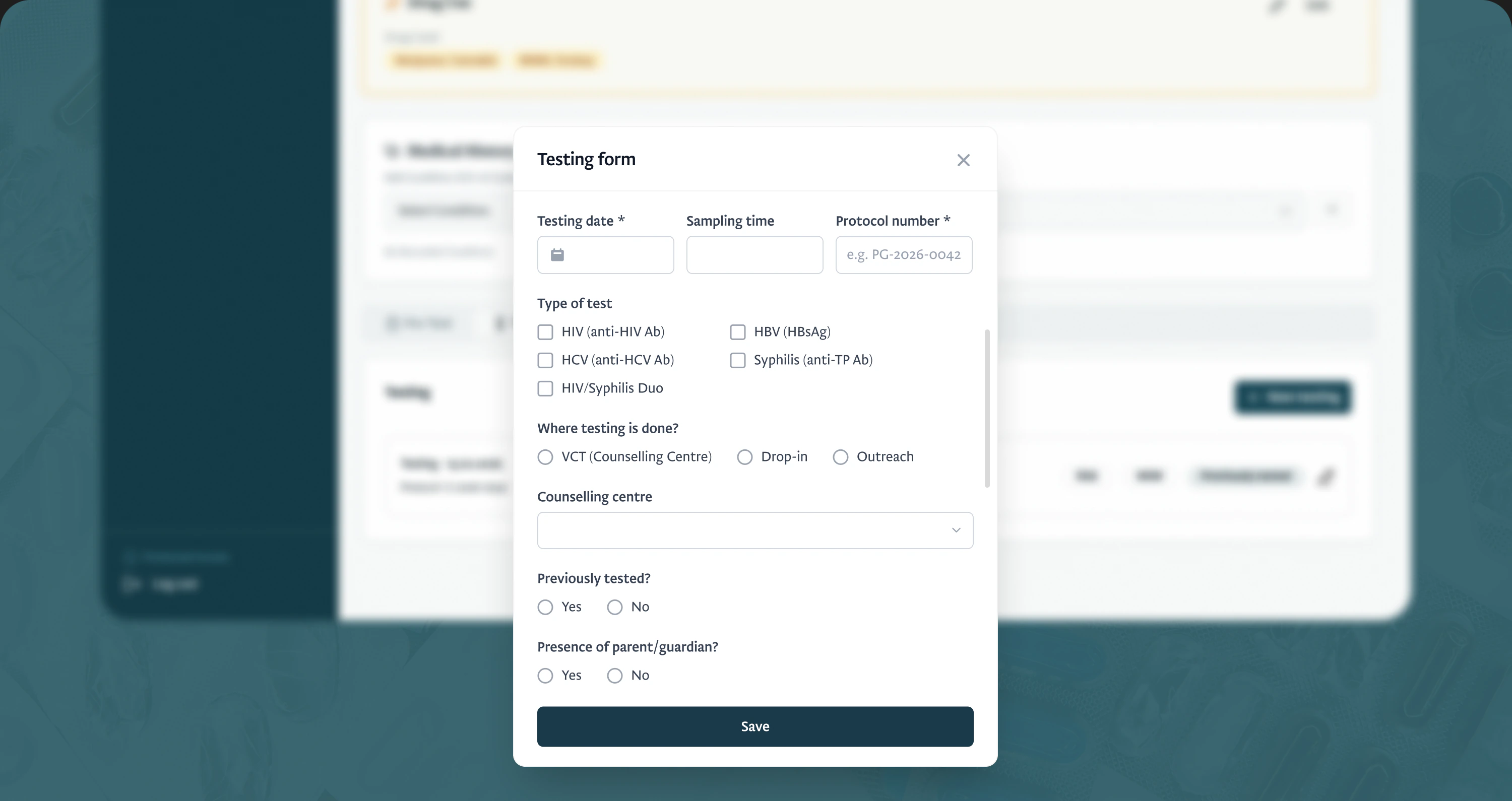
4 / 10Testing form
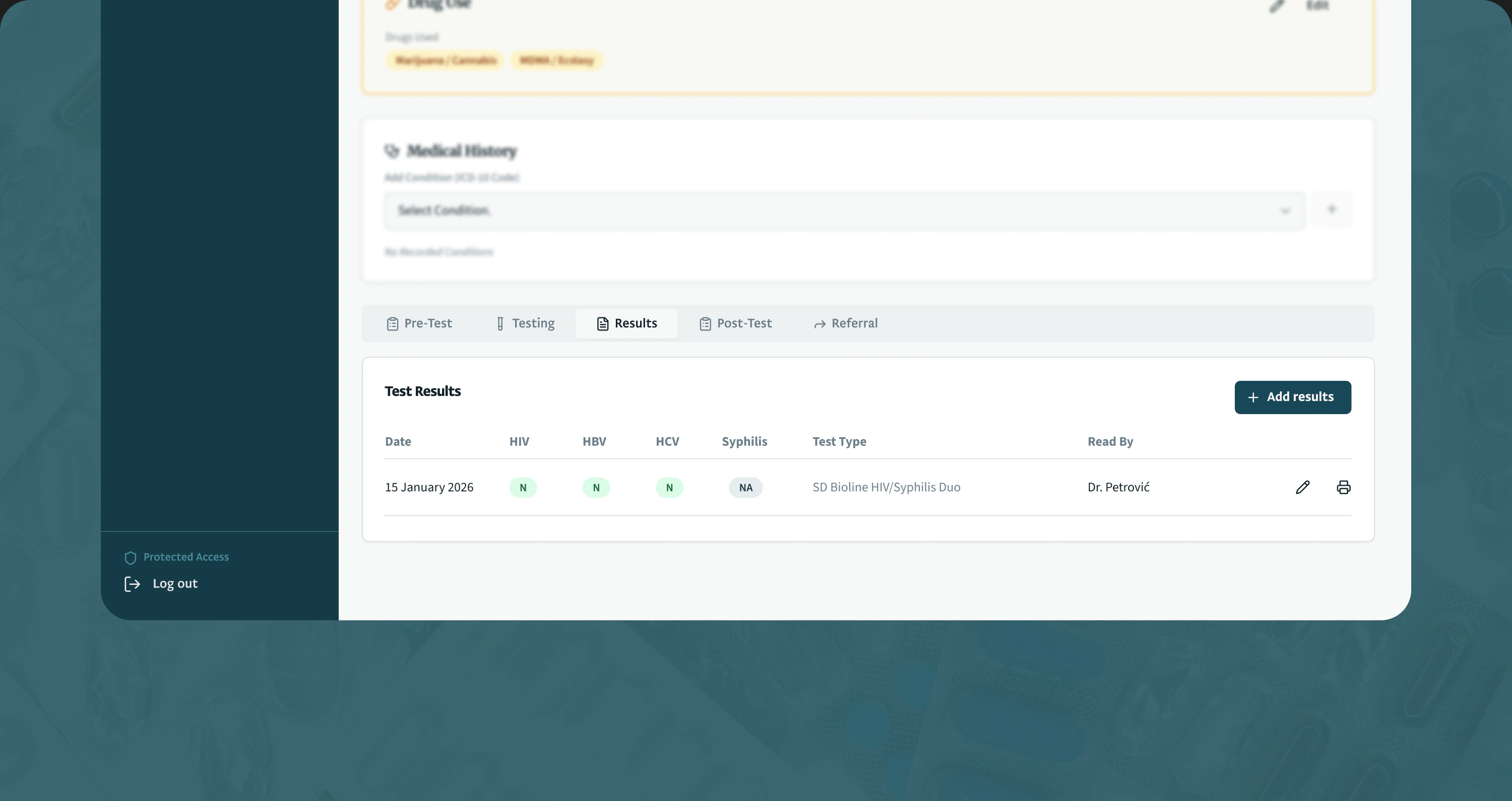
5 / 10Results
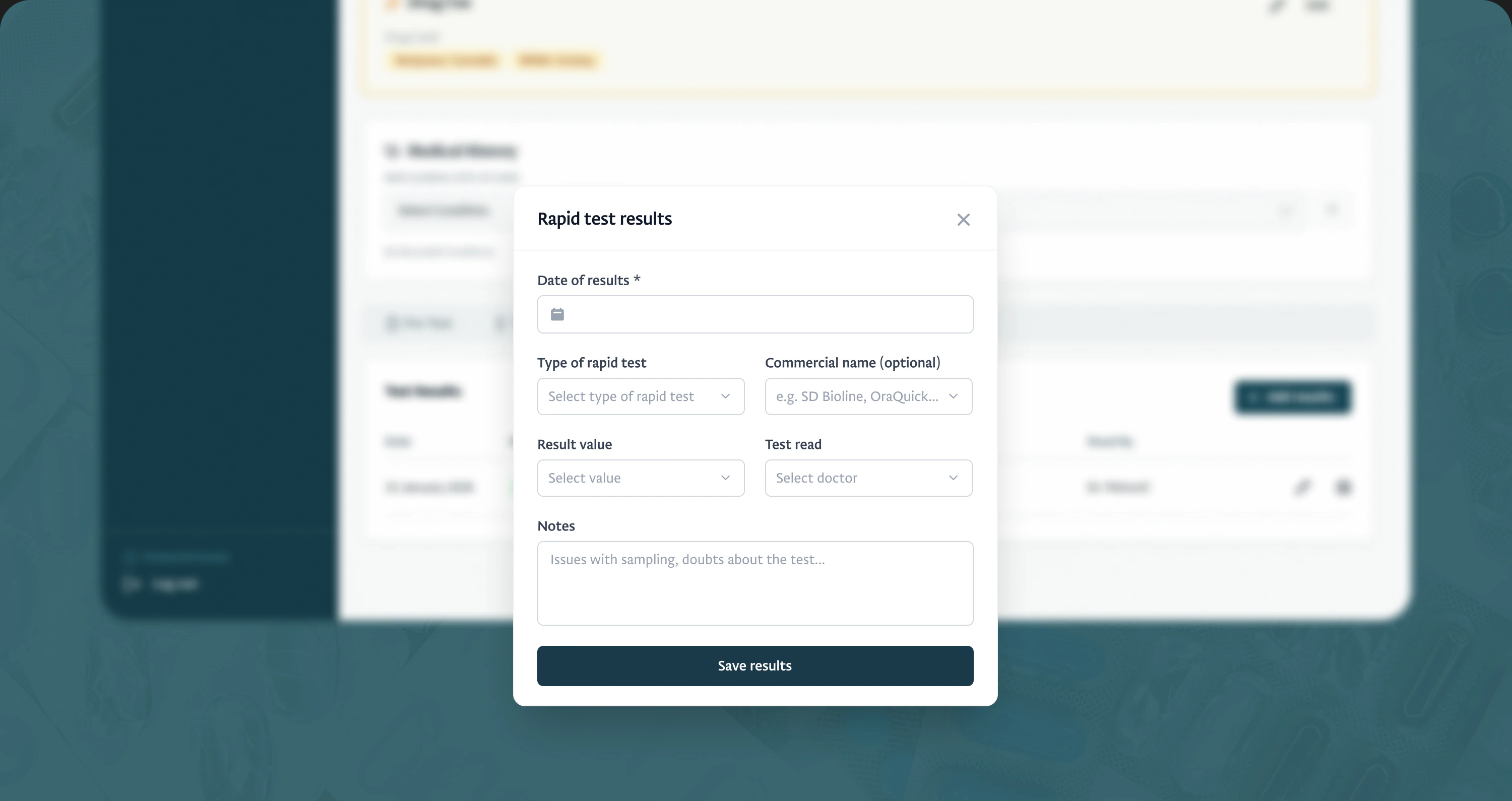
6 / 10Results form
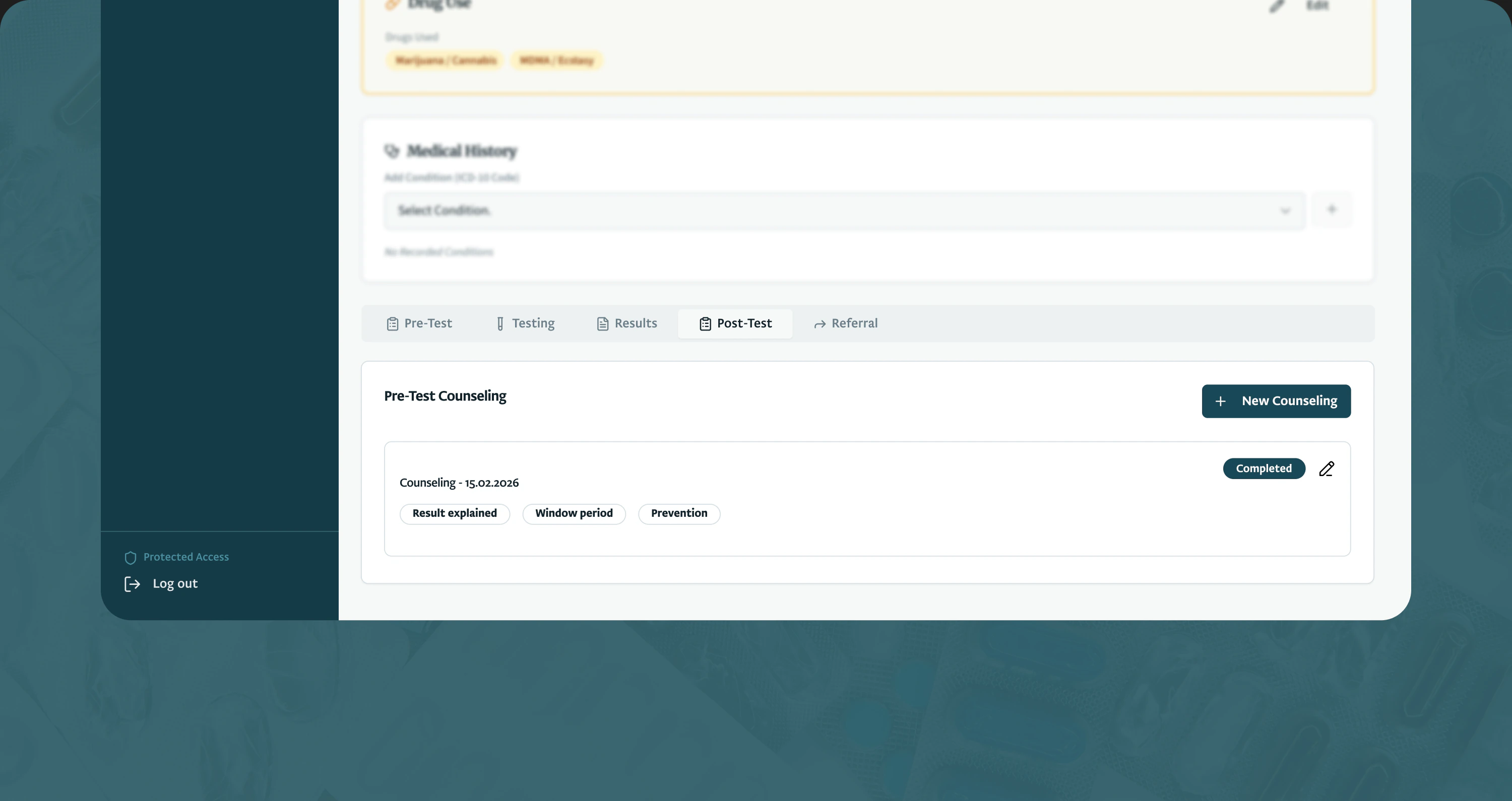
7 / 10Post-test
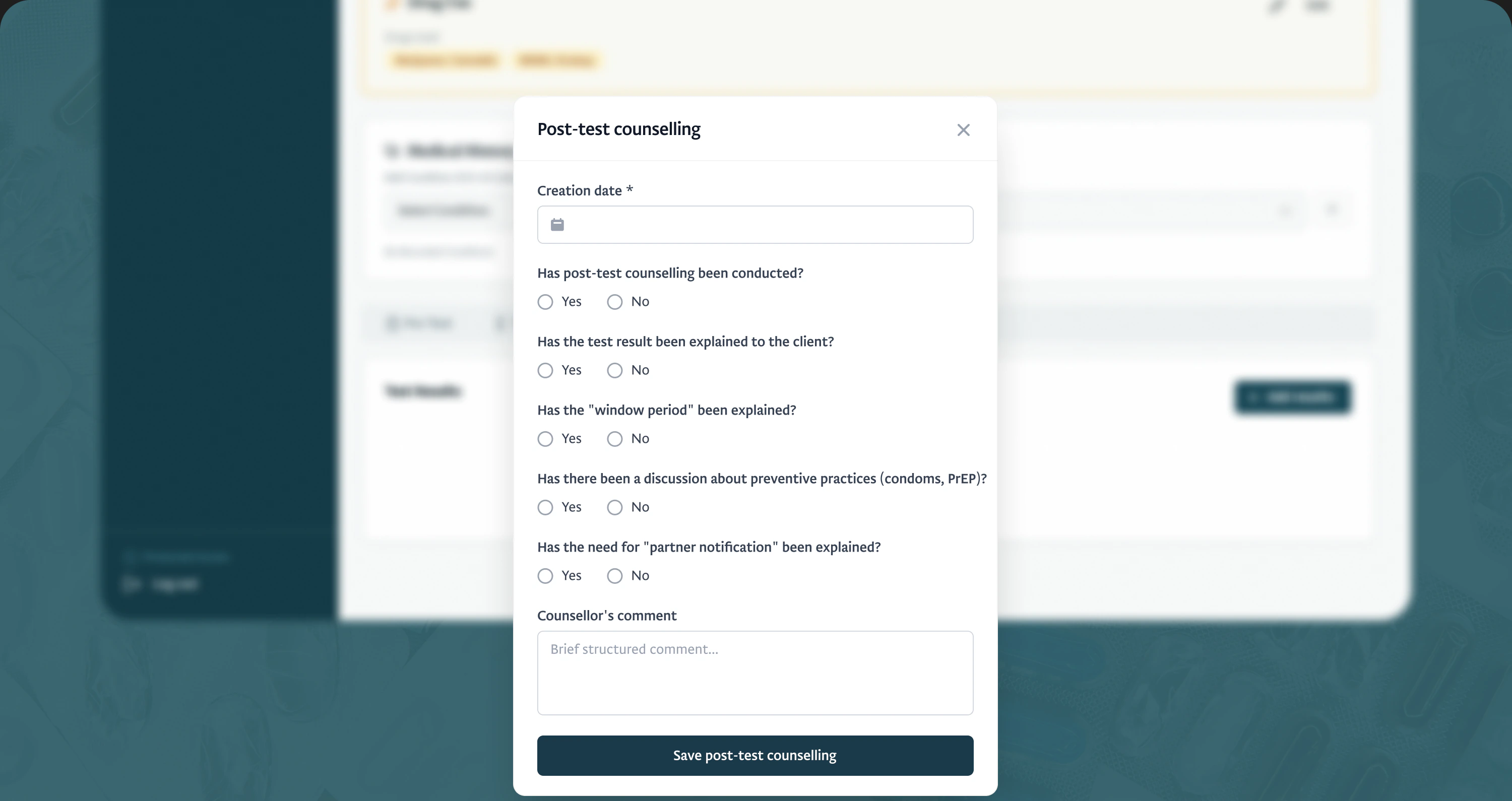
8 / 10Post-test form
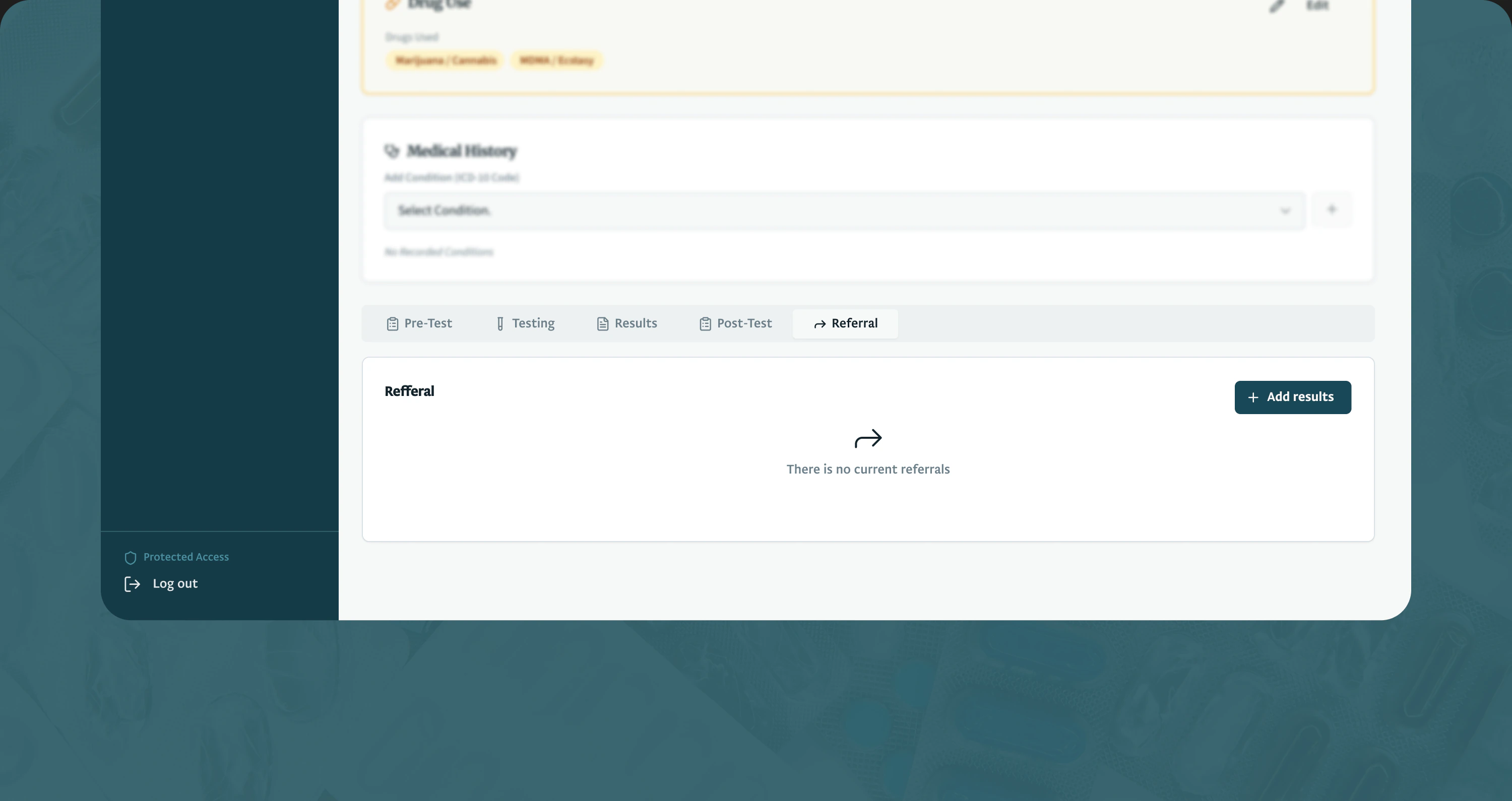
9 / 10Referral
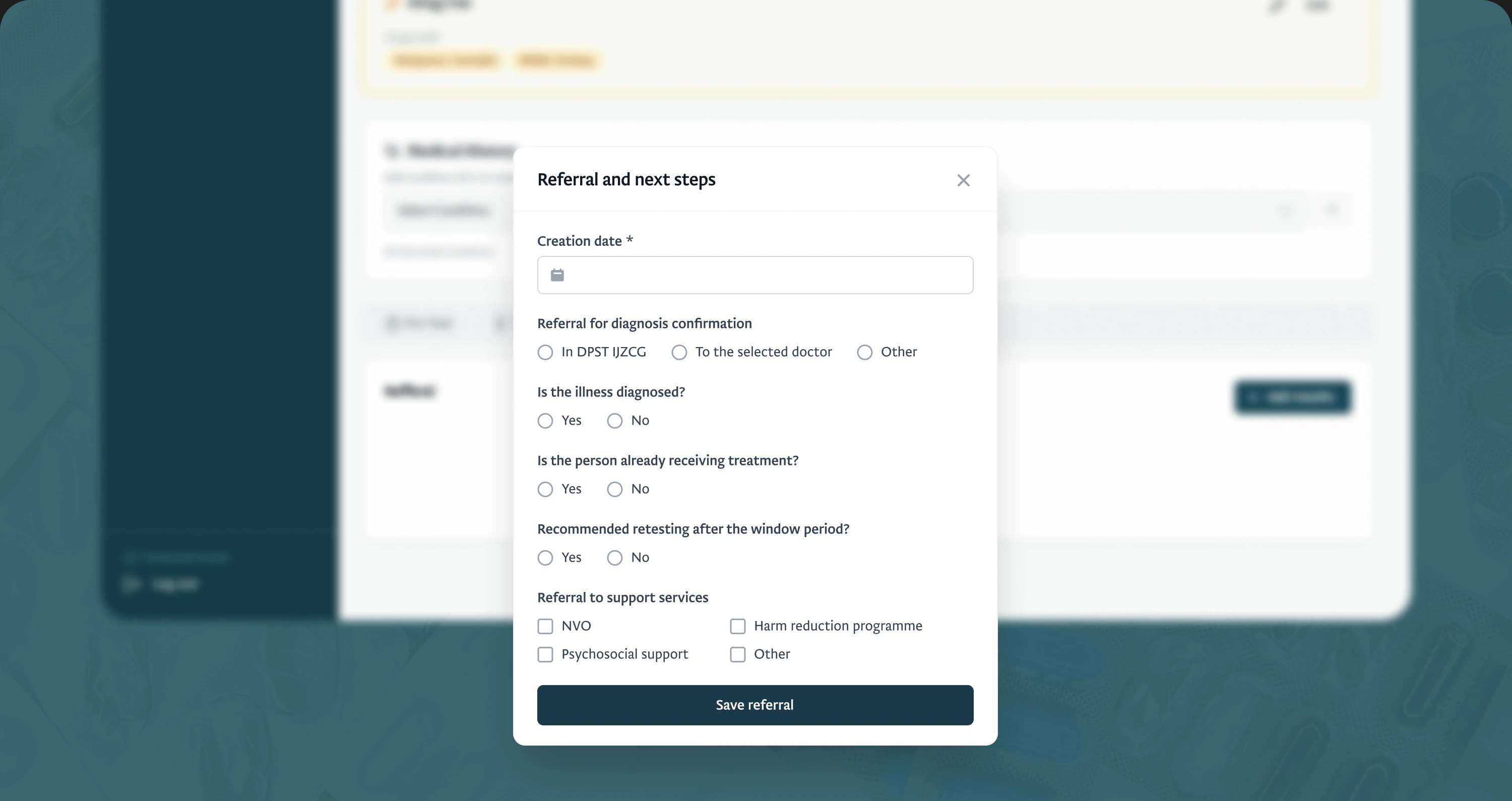
10 / 10Referral form
The ten steps of the DPST protocol, as the counsellor works through them.
Pre-test, test, result, post-test, referral.
What used to be a stack of separate paper forms is now one guided flow. The counsellor records pre-test counselling, the testing session with protocol number and risk assessment, results for HIV, hepatitis B, hepatitis C and syphilis, post-test counselling and any referral to further diagnostics or support services. Results are restricted to positive, negative or not tested; the system accepts nothing else. A result form prints on demand, and treatment status is tracked when a diagnosis is confirmed.
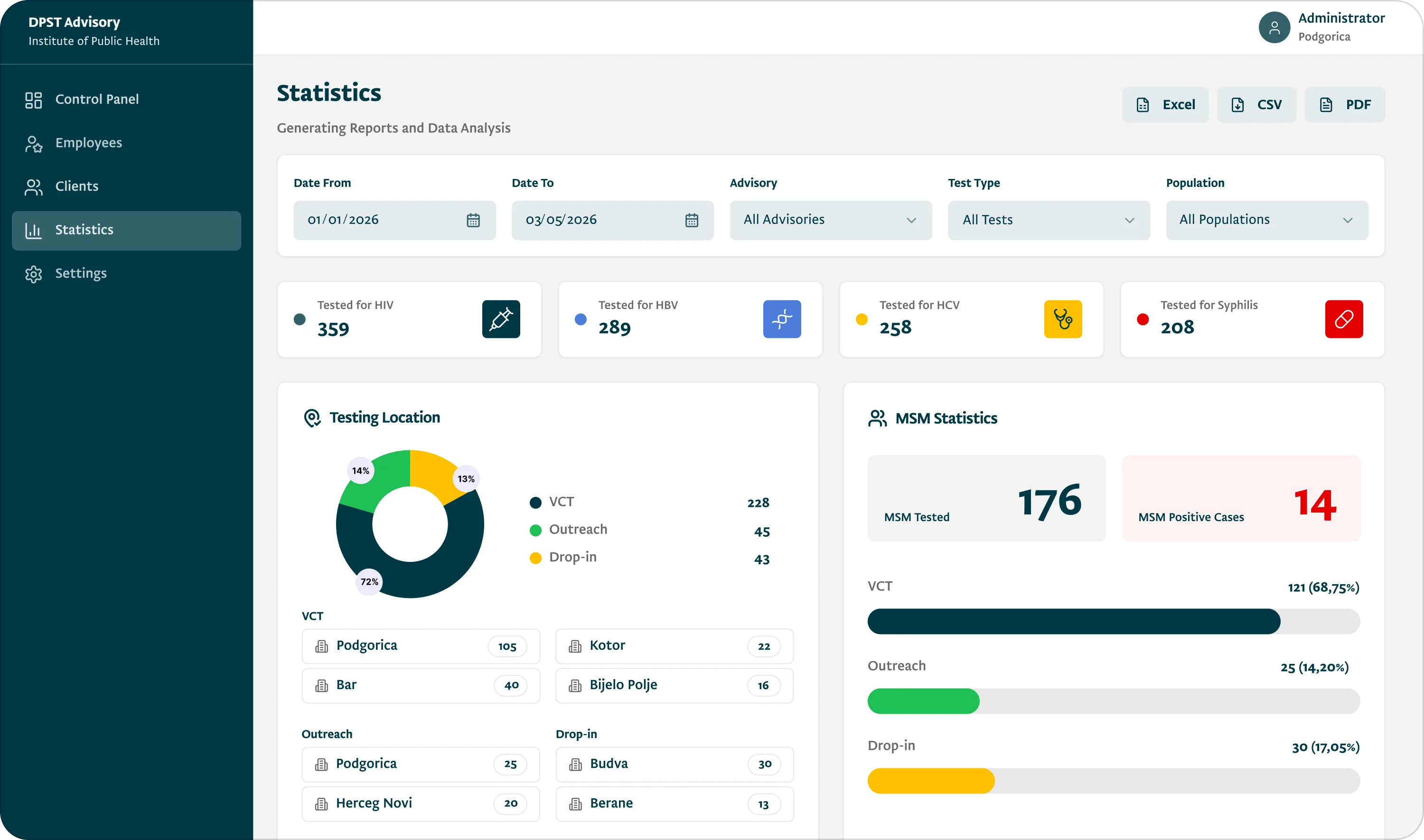
Export of selected indicators, in a period.
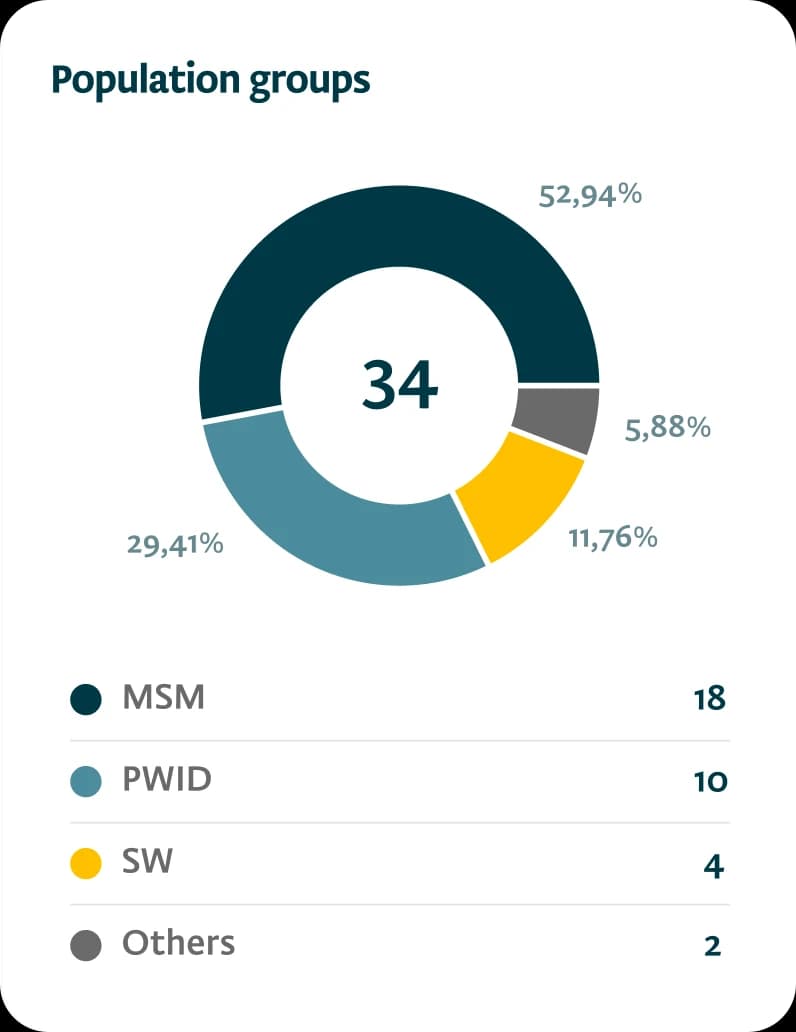
Coordinators choose any combination of indicators for any date range: tests performed, people tested, results by test type, activity by centre, breakdowns by key population. The system merges the data and exports to Excel, PDF or CSV, formatted for print. A national report that used to mean collecting spreadsheets from nine cities is now a filter and a click.
The protocol changes. The system keeps up. No developer needed.
Testing reasons, risk categories, key populations, referral options and distributed materials are all codebooks the administrator maintains. New values can be added at any time; outdated ones are deactivated, never deleted, so historical records stay intact. When the protocol or reporting requirements change, the institute updates the system itself.
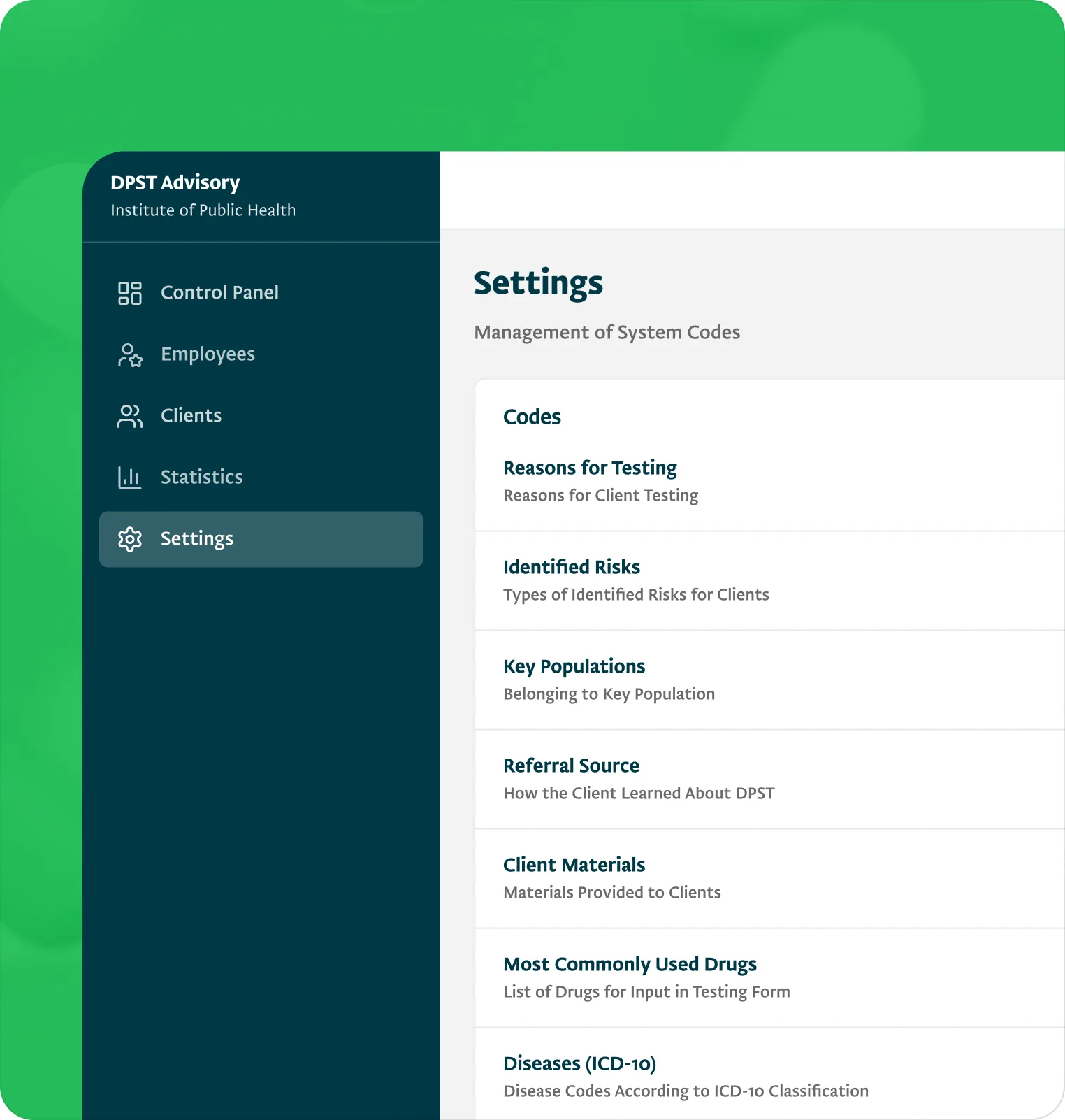
The national picture used to take weeks of collating. Now it takes a date range and a click.

Whether you're replacing paper forms, unifying records across regional offices or reporting to a national standard, we'll help you choose the smallest sensible starting point and a delivery model that fits your team.
Our playbook for integrating AI into product design and development workflows.
Download the playbook