Custom Software DevelopmentCroatia
They are a small and agile team, who can quickly adjust and deliver every reasonable request we need.
4.5
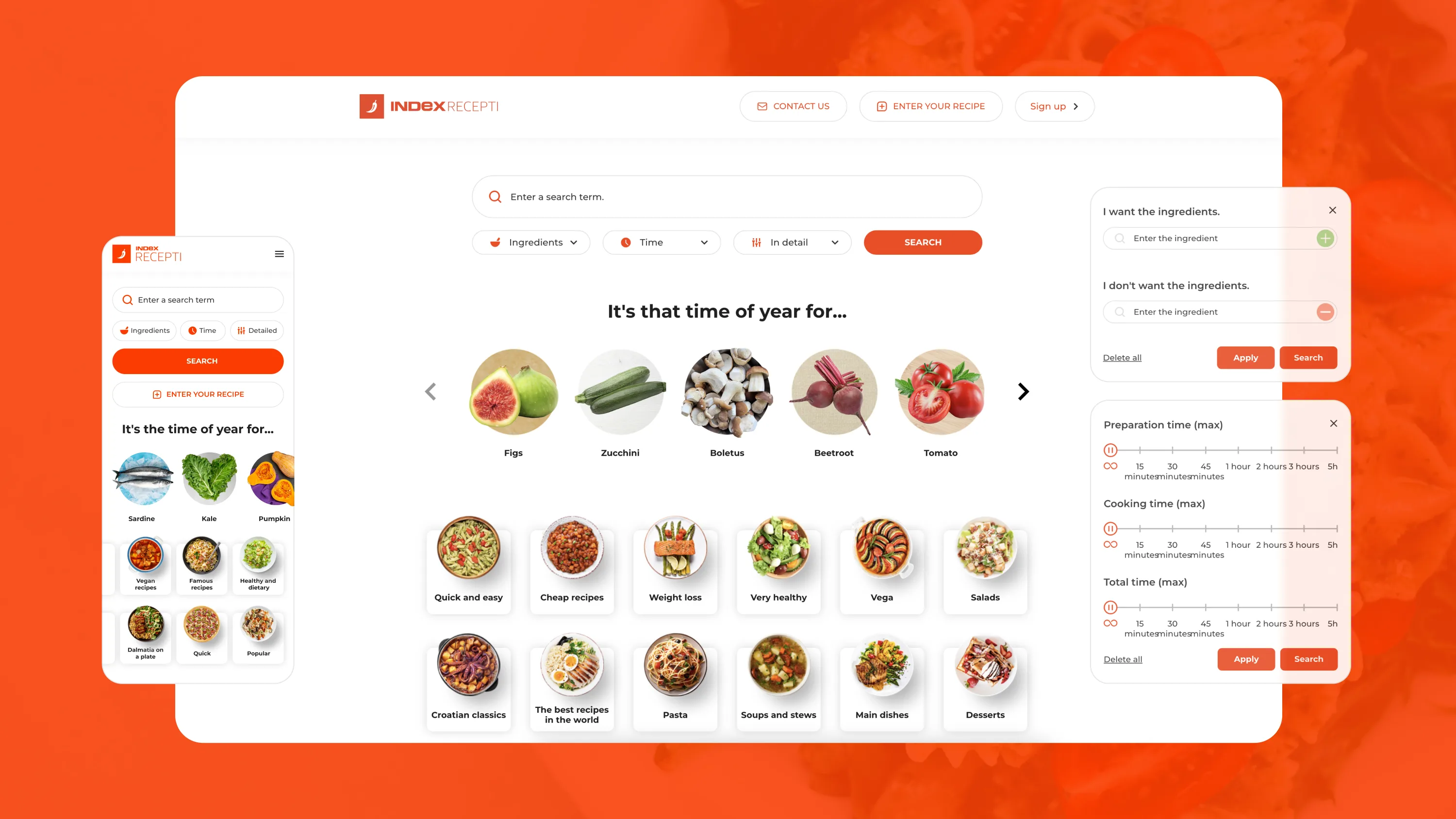
The design, frontend, backend, admin panel and infrastructure behind recepti.index.hr, a recipe platform built inside Croatia's largest news portal.
Index.hr is Croatia's largest independent news portal, run by Index Promocija from Zagreb. It reaches a national audience every day with news, sport and lifestyle coverage.
In late 2019 Index decided to move into food. Not a recipe tag on the news site, a product of its own: recepti.index.hr, a standalone platform sitting inside the Index portal with its own search, its own contributors, its own advertising inventory and its own audience. They asked us to design and build it. We did, and we have shipped it ever since.
Index had reach but no product. A recipe tag on a news portal collects articles, it does not let a reader filter by what is in their fridge, rescale a dish for six people, rate it, save it or publish their own. The food market Index wanted was already held by dedicated platforms that had spent years earning Google's recipe results, and a news CMS cannot compete with that: it has no ingredient model, no structured data for recipes, no contributor workflow. Every one of those had to be built. Index also had a hard requirement: a reader already logged into Index had to stay logged in, and the whole thing had to run on infrastructure their own engineers could live with.
Index.hr already had a brand and a house style, so this was never an identity project. Our job was to design a product that felt like Index and behaved like a recipe platform, two things that pull in opposite directions. A news portal is optimised for scanning headlines. A recipe is read standing up, one hand busy, screen at arm's length.
We ran wireframes a sprint ahead of development for the whole build, so engineering never waited on design and design never got specified after the fact. The interface work that mattered most was the recipe page itself: ingredient groups with their own headings and footnotes, preparation steps that carry their own photos and video, a nutrition table that stays readable at 360px and a portion control placed where a reader actually reaches for it.
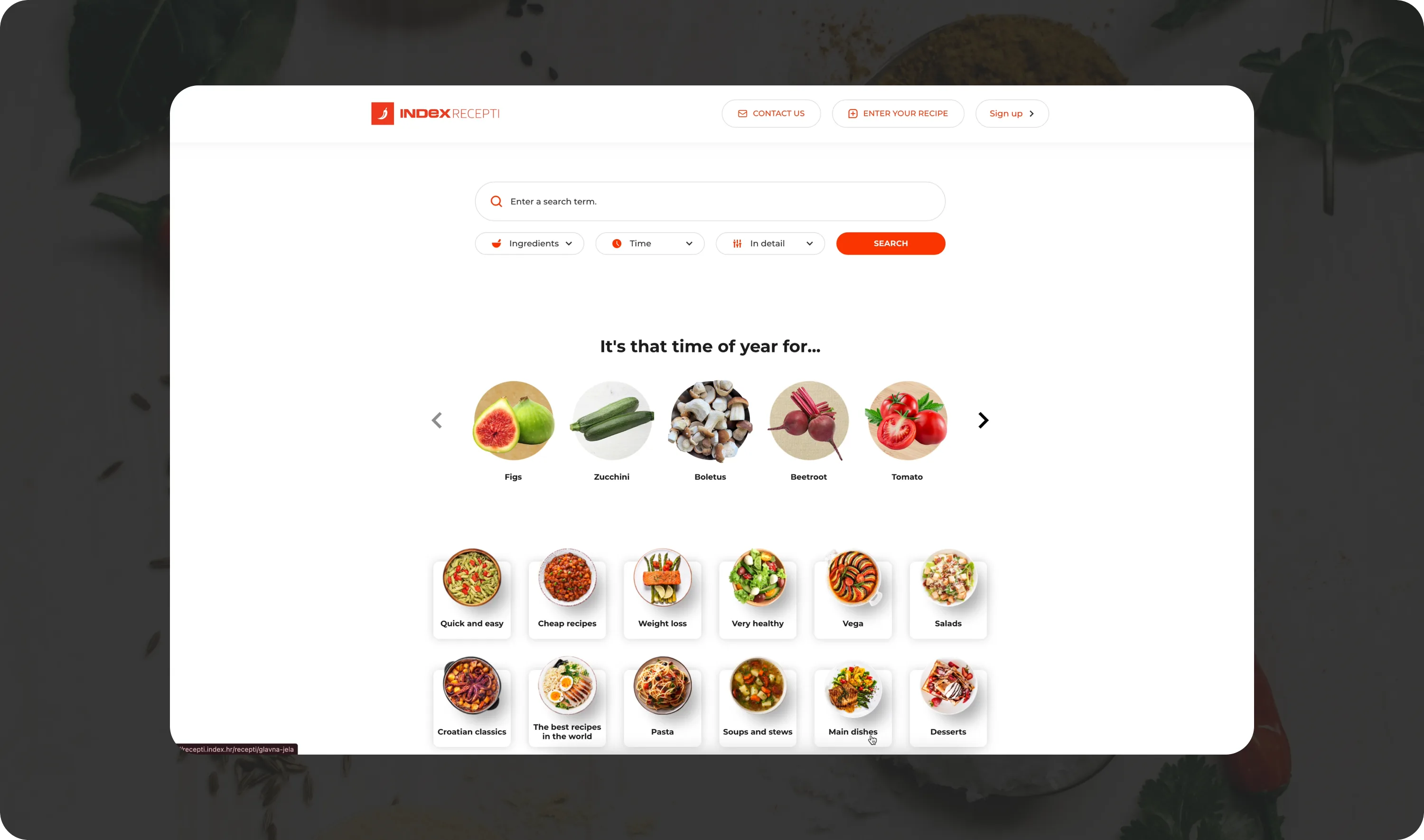
Searching the actual ingredients, not the cookbook.
We built the search on Elasticsearch so a reader can name the ingredients they have, name the ones they will not touch and cap the result by cooking time, calories, price band or difficulty. Croatian is heavily inflected, so exact matching would fail constantly. The query runs fuzzy across recipe names, descriptions, categories, tags, author names and ingredient keywords, so a misspelling or the wrong case ending still finds the dish.
Readers stopped searching for recipes. They started searching for dinner.
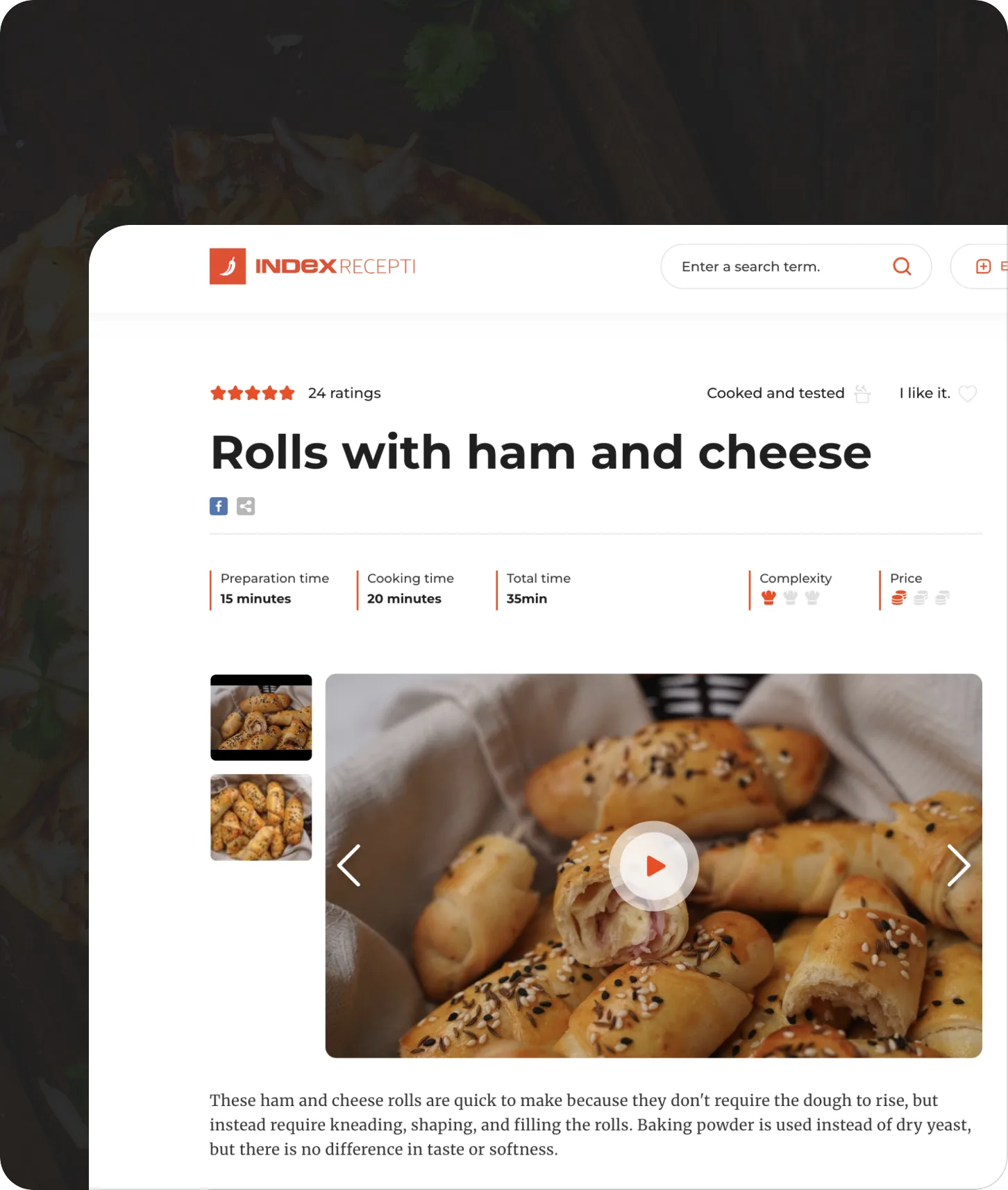

Try it: change the number of servings
Dynamic rescaling of the recipe's portion.
Change the number of people and every quantity rescales in place, properly: grams and millilitres round to sensible precision, and cups, tablespoons, teaspoons and pinches are re-expressed as real fractions, so a reader gets three quarters of a cup rather than 0.73 cups. Around it sits the rest of what a cook needs: ingredient groups with footnotes, preparation steps carrying their own photos and video, an optional nutrition table, equipment, prep and cook times split and totalled.
Change the servings above and the quantities rescale, exactly as they do on the site.
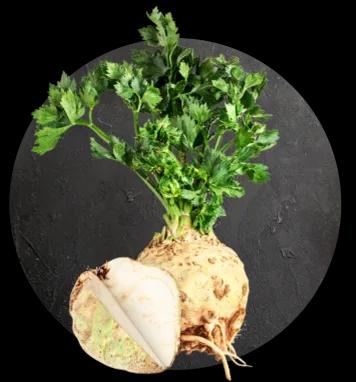
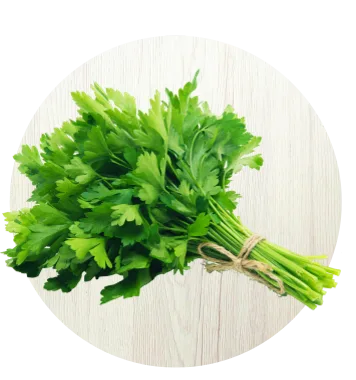

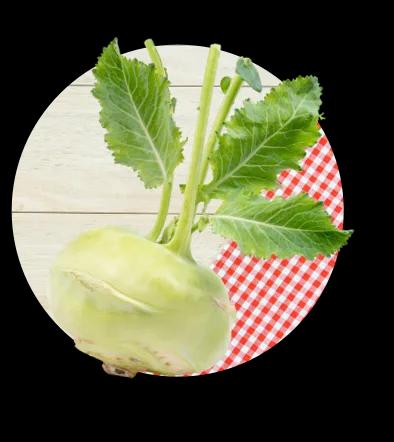


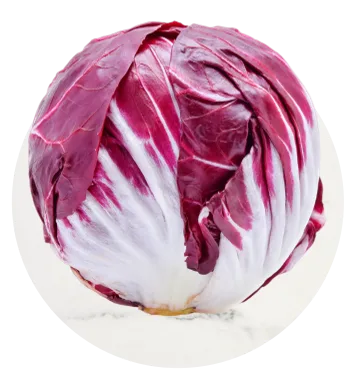






4,000 recipes matched with the appropriate ingredient strings.
Ingredients started as free text. We built a proper ingredient entity with its own name, description, image, keyword list and slug, gave every ingredient its own page listing every recipe that uses it and put seasonal ingredients on the homepage for editors to swap through the year. For the migration, we wrote a matching job that reads every unlinked ingredient string, compares it against ingredient names and keywords in a single pass and writes the relation where it finds a match. It runs nightly, skips what is already connected and picks up new recipes on its own.
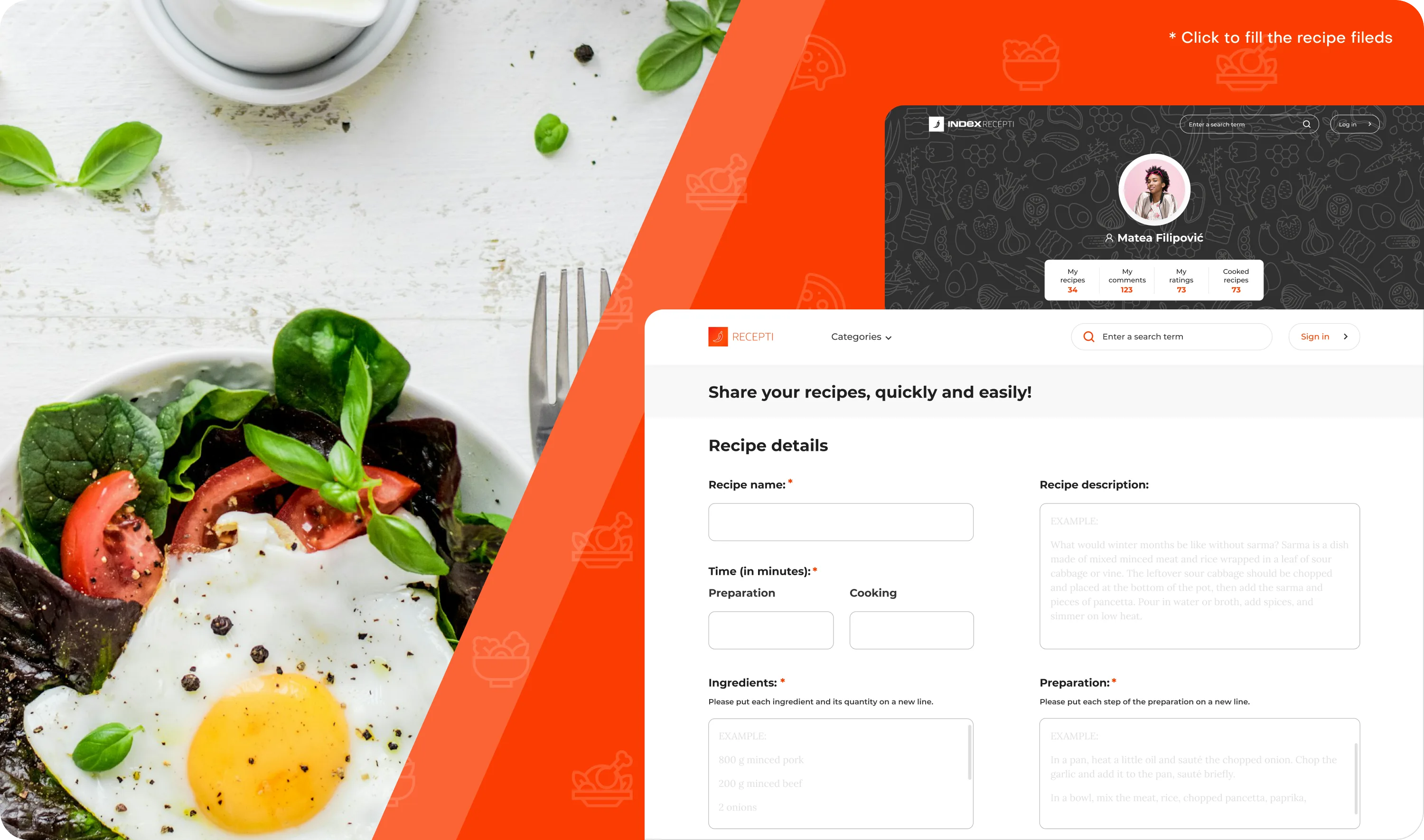
A publisher with one kitchen becomes a publisher of hundreds of recipes.
Registered readers write their own recipes through the same structured form the editors use, preview the result and submit. Nothing goes live on its own. Every submission lands in a review queue with a status of its own, and an editor approves, holds, archives or blocks. Readers get profiles, collections, a public list of what they have cooked and two ways to respond to a recipe: how they liked it and how they make it differently.
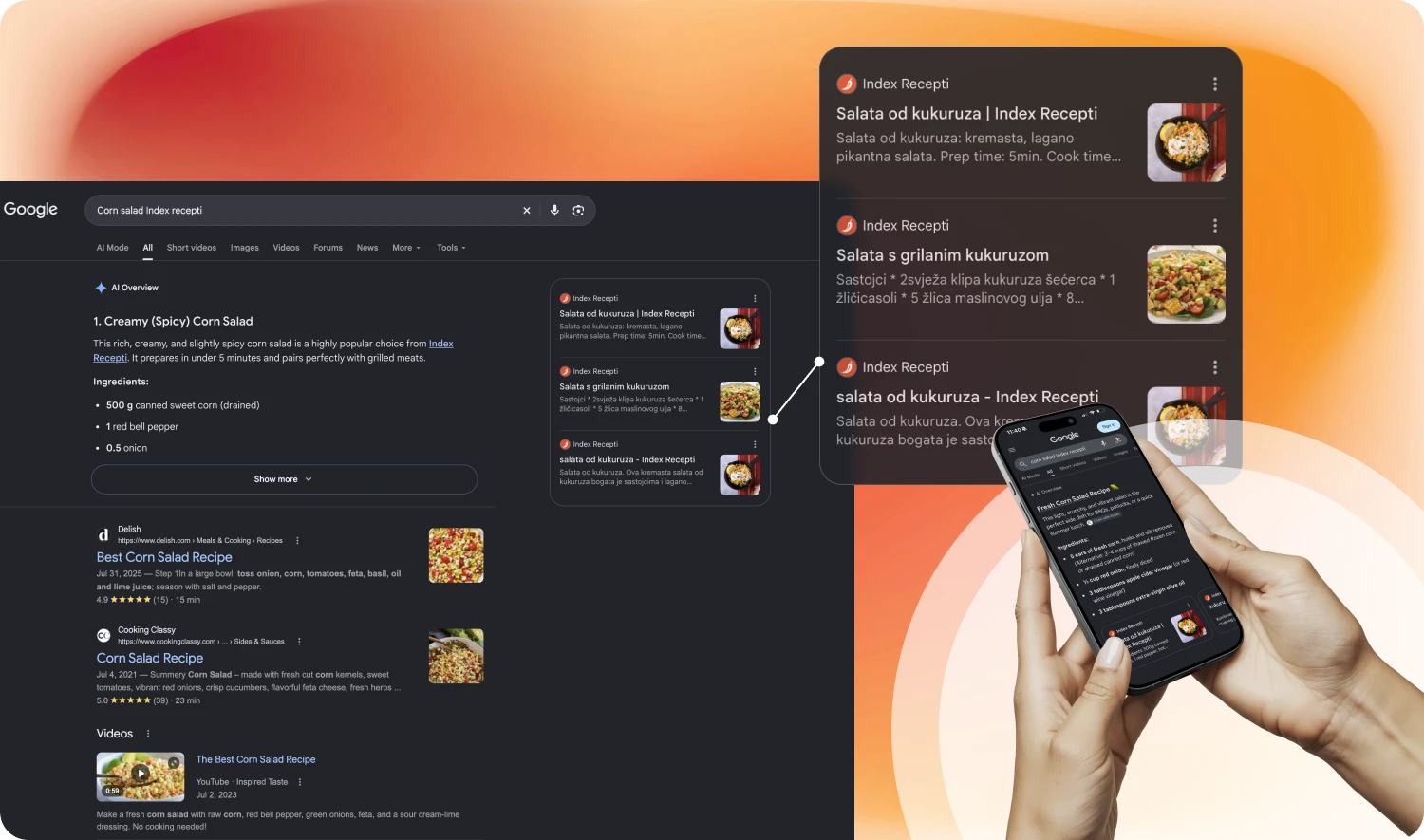
Every recipe ships as a page Google can read.
Every recipe emits full schema.org markup: ingredients, step-by-step instructions grouped into sections, prep, cook and total time in ISO duration, aggregate rating and review count, nutrition values, embedded video, author, cuisine and yield. Category, tag, ingredient and profile pages carry their own structured data on top. The frontend runs server-side rendered through Angular Universal, so a crawler gets finished HTML on first request, and URLs are readable slugs. Canonical tags are injected per route so filtered and sorted views never compete with the page they came from, the sitemap is generated and images are served at a size chosen per placement and loaded as they are reached.


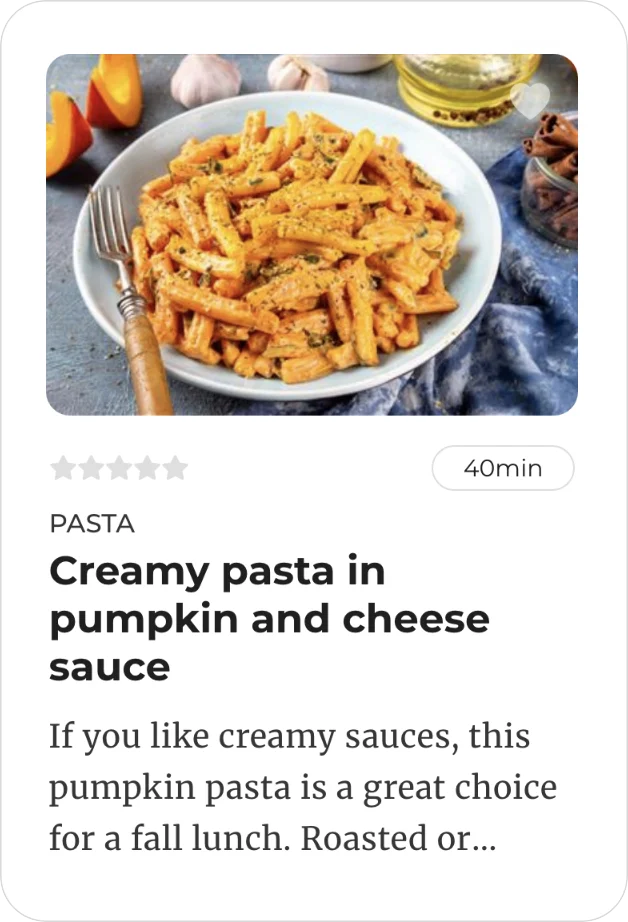
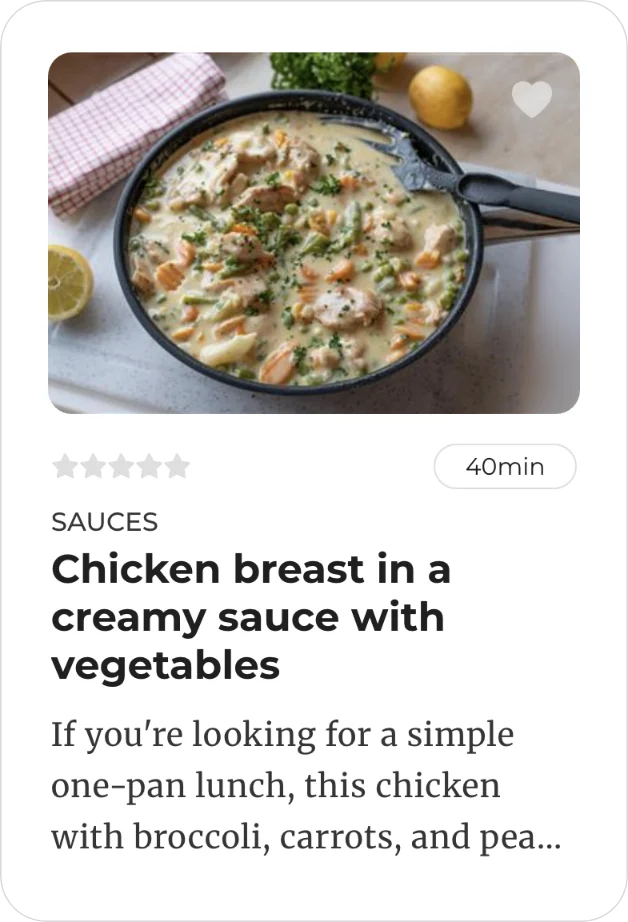
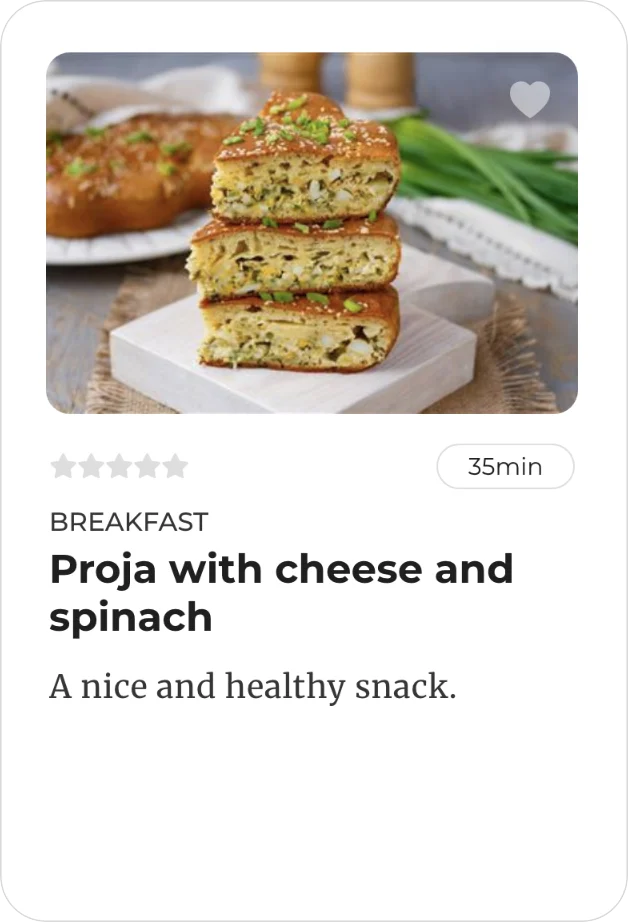
Every recipe is a page Google can read. Every ingredient is another one.
A new audience is only half of it. This one arrived with inventory attached.
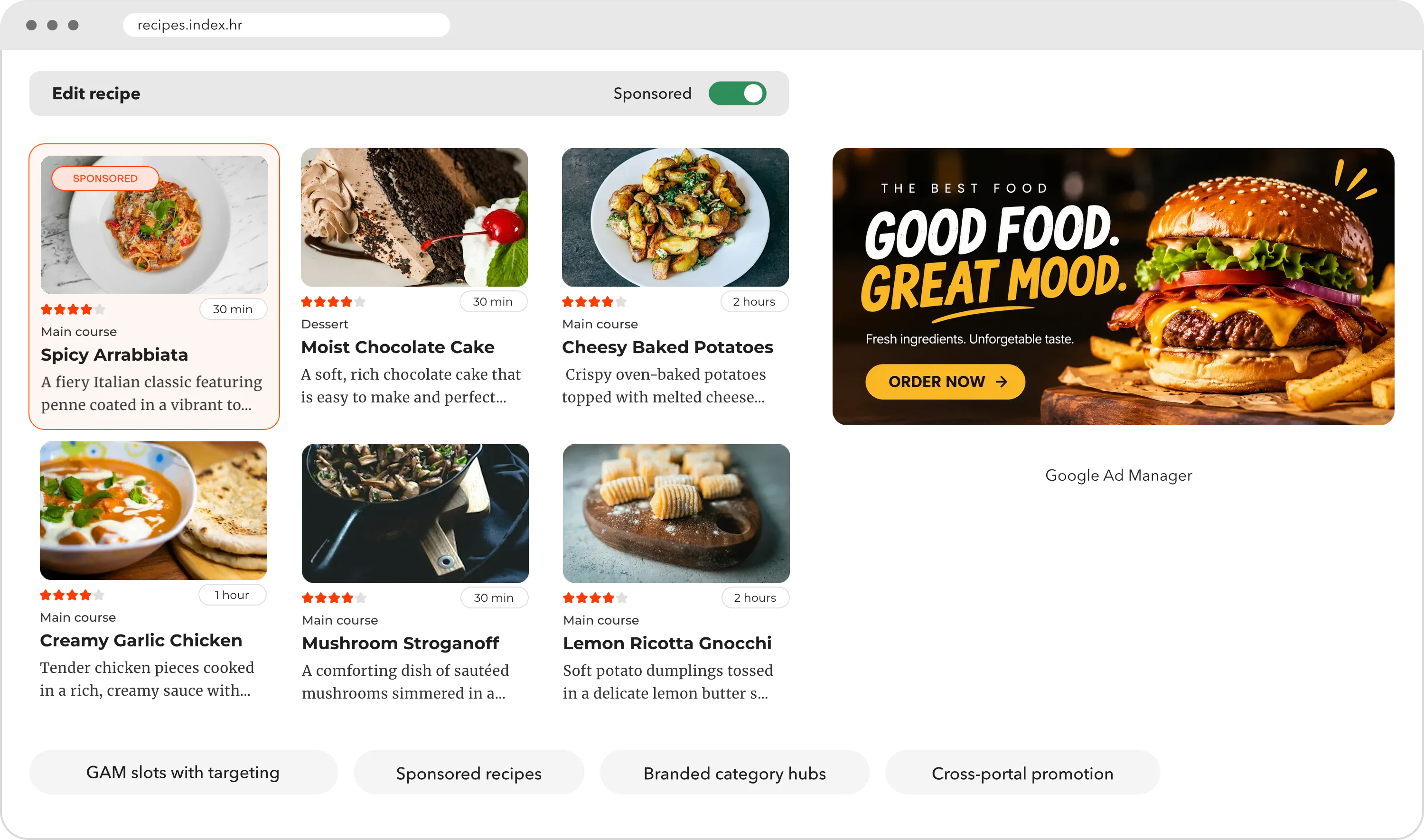
The platform was built to earn from day one. Ad slots run through Google Ad Manager with targeting, placed by the same editors who manage content. Individual recipes can be marked sponsored and carry sponsor text with their own weighting in listings. Whole category hubs can be branded, with a sponsor name, logo, description and link. Promoted articles pull from the main Index portal into the recipe site on a scheduled window, so traffic runs both ways.
Editors run the platform through the CMS.
The admin panel is its own application, not a settings screen. Editors manage recipes, nested categories, tags, ingredients, comments and users. They pick what is featured on the homepage and in what order, curate special category hubs, moderate reader submissions and photos, read feedback and pull promoted articles across from the main Index portal on a date window. Recipes can be written ahead and published on a schedule, and the search index respects the publish time.
Our APIASP.NET Core




One Index account. No second login, no second password.
Readers arrive from index.hr already logged in and stay that way. Authentication runs through Index's own single sign-on over OAuth and OpenID Connect, returning a JWT the platform validates, while roles and permissions stay on our side. Media sits in object storage with server-side preview sizes generated per image, the platform ships in Docker and background jobs handle work that should never block a request: view counts, rating aggregation, related recipes, slug backfills and the ingredient sync.
Index Recipes went live in 2021 and is still running stronger than ever.
It was never a feature bolted onto a news site. We built every layer a recipe platform needs and kept adding them: ingredient-aware search, a real ingredient model, reader submissions with moderation, structured data Google can read, native ad inventory and single sign-on into the Index account.








Inspiring everyday cooking through simple recipe discovery.
Whether you're starting an MVP, stabilising a growing product or planning AI features, we'll help you choose the smallest sensible starting point and a delivery model that fits your team.
Our playbook for integrating AI into product design and development workflows.
Download the playbook